Two related papers published in 2016 revised one of biology's most repeated facts. For decades, textbooks stated that the human body contained ten times more bacterial cells than human cells. The actual ratio, the researchers found, is approximately 1:1. A typical person carries roughly 38 trillion bacterial cells alongside 30 trillion human cells.
The correction matters less than what it reveals. Even at 1:1, the body is more microbial than it appears. The gut alone hosts a community of hundreds of bacterial species engaged in continuous metabolic negotiation with the immune system, the nervous system, and the brain. Germ-free animal models — raised from birth without any bacterial exposure — develop immune systems that respond abnormally to ordinary challenges. Their immune organs are underdeveloped. Their microglia, the immune cells of the brain, fail to mature normally. The microbial community is not incidental. It is constitutive.
The body is not a machine. It is an ecosystem.
This discovery arrived decades after Western medicine had built the most sophisticated intervention system in history on the opposite assumption. The machine metaphor, formalized in the 17th century and industrialized in the 20th, produced extraordinary tools: antibiotics that cleared bacterial infections, surgical techniques of precise mechanical elegance, pharmaceutical interventions targeting specific receptors. The results were real. Life expectancy in industrialized countries roughly doubled over the 20th century.
But the tools were designed for acute conditions — infections, injuries, structural failures — not for the chronic diseases that increasingly dominate the disease burden of wealthy nations. The machine model treats symptoms as malfunctions to be corrected by targeted inputs. Chronic disease resists this logic because it is not a malfunction but a systems failure. You cannot fix an ecosystem with a wrench.
Ivan Illich saw the structural limits of the model before the microbiome evidence arrived. In Medical Nemesis (1975), he argued that medical institutions, past a certain scale, begin producing the conditions they were built to treat. The complexity of the intervention system creates new vulnerabilities in the people who use it. Hospitals generate hospital-acquired infections. Pharmaceutical management generates pharmaceutical dependencies. Illich called this counterproductivity — the point at which an institution starts working against its stated purpose by virtue of its own scale. The critique was sociological and philosophical. What the microbiome research added was biological mechanism.
Broad-spectrum antibiotics clear bacterial infections — and also disrupt the gut microbiome. A key study (Palleja et al., Nature Microbiology, 2018) found that while species richness recovered within roughly six weeks, nine common species remained undetectable in most subjects after six months. More recent research is stronger: a 2026 study tracking nearly 15,000 people found antibiotic-driven disruptions persisting well beyond two years. In children, repeated courses during developmental windows are now associated with increased risk of allergy, autoimmune conditions, and metabolic disease. The treatment produces conditions requiring more treatment.
This is Illich's counterproductivity, written in bacterial populations.
The parallel that Wendell Berry drew from agriculture clarifies what is happening. Berry, writing from a Kentucky farm in 1977, argued that industrial agriculture was applying the same logic to soil that industrial medicine was applying to the body: treat the system as a substrate, override its natural processes with targeted inputs, optimize for measurable output at the expense of systemic health. The result in farming was topsoil depletion, microbiome collapse, and increasing input dependency. The result in medicine, Berry suggested, would be the same — and the mechanism is now visible in the data.
Soil and gut share more than an analogy. Both harbor billions of microbial cells per gram — the colon can contain 100 billion organisms per gram of its contents; a gram of healthy topsoil contains up to 10 billion. Soil diversity is substantially greater than gut diversity, but both systems share the same vulnerability: simplification through industrial inputs. Industrial agriculture simplified soil microbiomes the same way that chronic antibiotic use simplifies gut microbiomes. Both lead to fragility. Both require increasing inputs to maintain the outputs that the living system once provided freely.
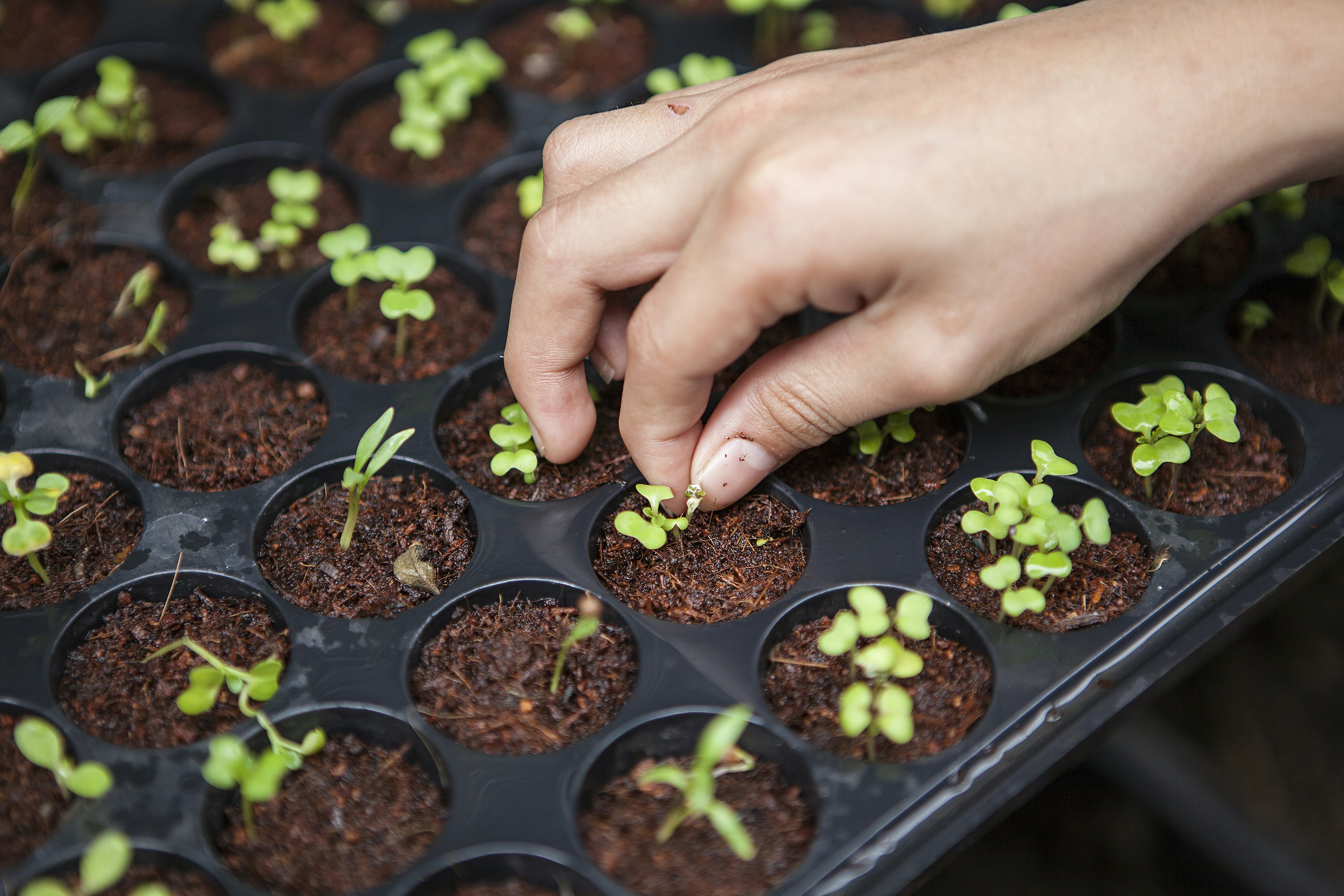
The permaculture response to industrial agriculture did not reject farming. It rejected the assumption that soil is a substrate. Permaculture works with the living system — builds microbial diversity, reduces chemical inputs that disrupt it, restores the relationships between plant roots and soil organisms that allow nutrients to cycle without external addition. The result is a farm that becomes more productive over time, not less.
Functional medicine, the emerging counter-movement within clinical practice, applies the same logic. Rather than targeting symptoms with specific interventions, it asks what systemic conditions are producing the symptom and works to restore those conditions. Dietary change to support microbial diversity. Reduction of inputs that disrupt the ecosystem. Attention to sleep, stress, and environmental factors that the machine model treated as peripheral. The methodology is not pharmaceutical but ecological: support self-regulation rather than override it.
This convergence was not coordinated. The permaculture movement developed in Australia in the late 1970s, working from observations of natural farming and traditional land management. The microbiome research emerged from molecular biology in the 1990s and accelerated through the 2000s. Functional medicine practitioners arrived at their approach through clinical observation of what standard-of-care protocols could not resolve. None of these communities were reading each other's work when they arrived at the same conclusion.
When unconnected thinkers in different fields reach the same insight by different paths, that convergence is evidence. Not of fashion or cultural mood, but of something real about how biological systems work.
The machine model will not disappear. It remains the right tool for the conditions it was designed to address: acute bacterial infection, structural injury, surgical correction of specific failures. The appendix that bursts needs a surgeon, not a probiotic. But chronic disease — the metabolic disorders, autoimmune conditions, neurological complaints, and mood disruptions that now dominate the clinical picture in wealthy countries — does not resolve with the tools built for acute mechanical failure.
A generation of researchers is now documenting what the microbiome is doing: training the immune system to distinguish self from other, regulating neurotransmitter production, influencing metabolic function, calibrating inflammatory response. Each discovery adds weight to what the ecological framing already suggested — that health is a property of a functioning system, not the absence of specific pathogens.
Permaculture took two decades to move from fringe practice to agricultural mainstream. The microbiome has moved faster because the molecular evidence arrived in force and because the chronic disease burden was undeniable. What is beginning to emerge — slowly, against institutional resistance — is a medicine that treats the body the way a good farmer treats the land.
The insight was always the same. The domains took different paths to reach it.