In 2010, a researcher at Brigham Young University ran a meta-analysis of 148 studies covering more than 308,000 participants. The finding: social isolation increases mortality risk at roughly the same rate as smoking 15 cigarettes per day.
The finding is not about emotional wellbeing. It is about dying. Loneliness kills, with approximately the same reliability as a pack-a-day habit.
The US Surgeon General issued a formal advisory in 2023 declaring loneliness a public health epidemic. Approximately half of American adults reported measurable loneliness. The advisory noted that rates had been rising for decades before COVID made them visible.
These numbers describe a failure. The question that rarely gets asked: a failure of what?
The Density Paradox
The intuitive answer is: not enough community. The proposed solution is usually: more connection. Better values. More empathy. More digital tools.
None of this addresses the mechanism.
A 2024 study published in Scientific Reports examined urban environments and loneliness in the GZM metropolitan region of Poland, one of Europe's most densely populated urban areas. The findings: greater overcrowding combined with population density was associated with higher loneliness. High-rise buildings were perceived as more oppressive than other housing typologies. Contact with green space and social inclusivity were associated with lower loneliness.
More people. More loneliness. That is the density paradox, and it stops being a paradox once you understand how buildings work.
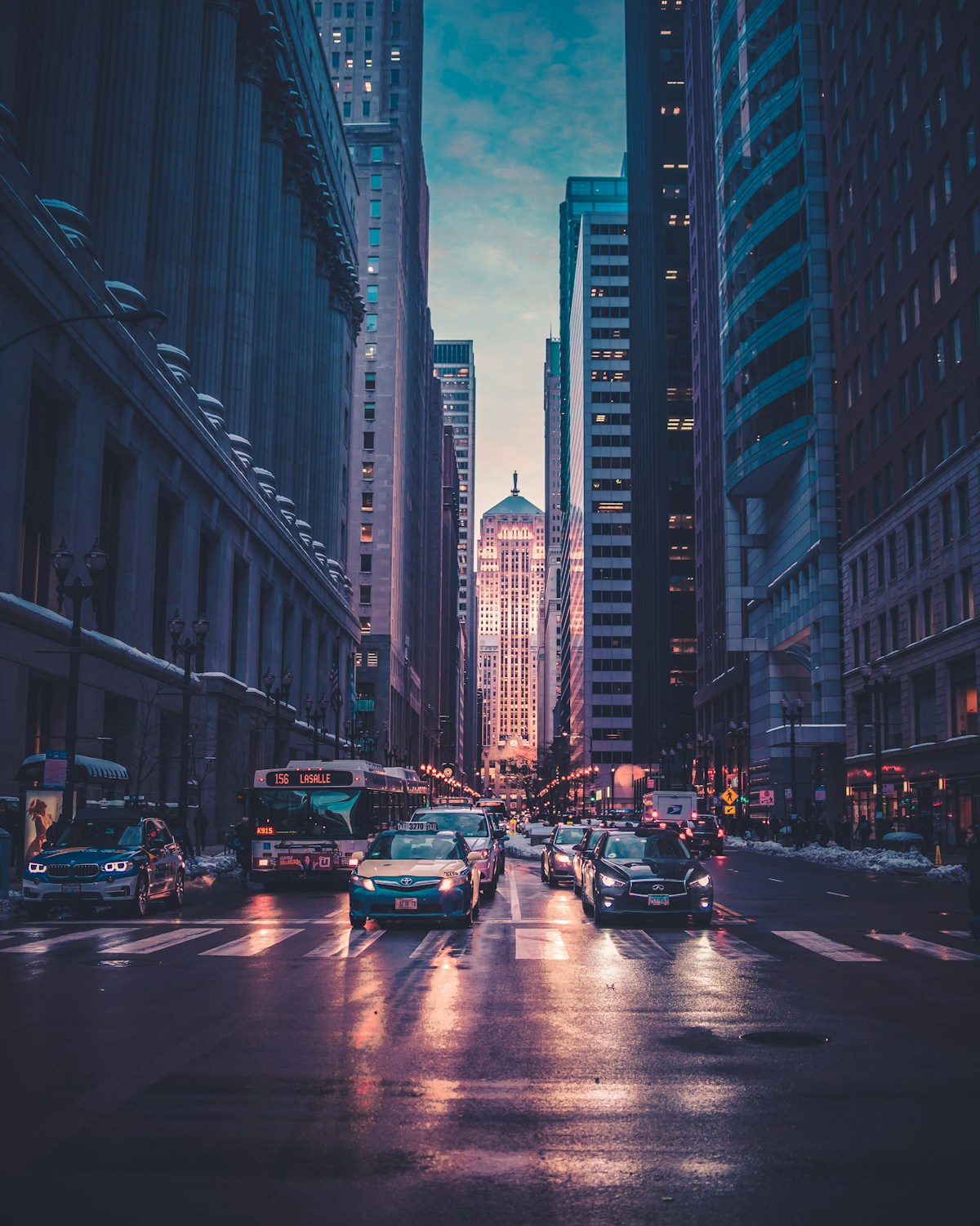
A high-rise residential tower produces proximity without encounter. Residents share the same building, the same elevator, the same lobby. They can live on the same floor for years and never exchange a word. The building is physically dense and socially atomized simultaneously.
The mechanism is the absence of threshold. In a traditional city, a Moroccan medina, a Georgian terrace, a Spanish barrio, there were graduated layers between private interior and public street. The courtyard. The front step. The semi-covered passage. The planted threshold. Each layer was a place where contact could happen at the occupant's chosen level of exposure. You could be among people without being exposed to them. You could withdraw without disappearing.
High-rise towers eliminate these gradations. The elevator opens onto a corridor. The corridor leads to a door. The door opens to a sealed private unit. There is no intermediate zone where incidental social contact could develop. Oscar Newman's defensible space research, conducted across New York City public housing in the early 1970s, documented the direct consequence: residents of high-rise blocks withdrew from shared spaces because those spaces felt owned by no one. The larger the number of apartments sharing an entrance, the less anyone monitored it, and the less anyone used it.
Community is not a value. It is a function of design.
What Was Destroyed
Ray Oldenburg described "third places" in The Great Good Place (1989). Neither home nor work, but the informal gathering sites: the café, the pub, the barbershop, the market square, the library corner. Third places share specific characteristics. They are accessible, free or inexpensive, leveling in social status, and organized around conversation rather than consumption. They are where weak ties form.
Weak ties matter more than people realize. Mark Granovetter's 1973 research showed that weak ties, acquaintances rather than close friends, are the primary channel through which people find jobs, encounter ideas outside their circle, and access information unavailable in their immediate network. Strong ties provide depth and security. Weak ties provide range and opportunity. They require physical sites to form and maintain. Third places are those sites.
American suburbanization systematically destroyed them. Zoning separated residential from commercial, making walkable access to a café or pub legally impossible in most jurisdictions. Car dependence made the neighborhood bar a planned logistical challenge. Strip malls and franchise economics replaced the independent neighborhood tavern with drive-throughs and parking minimums. In large areas of the American suburb, there is nowhere to go that is not home, a vehicle, an office, or a box store.
The built environment removed the infrastructure of casual connection. Then people wondered why connection became effortful.
Who Is Loneliest
The finding that consistently surprises: young people are lonelier than old people.
The BBC Loneliness Experiment in 2018, the largest survey ever conducted on loneliness, collected data from over 55,000 respondents across 237 countries and territories. Adults in their late teens and twenties reported the highest loneliness rates of any age group. The 2023 Surgeon General's data confirmed the pattern. Multiple meta-analyses have replicated it.
The intuition says this should be reversed. The elderly are more isolated, face bereavement, have smaller active social circles. But older adults have had decades to build stable relationships. They have practiced reciprocity. Many have spouses, children, and long-standing friendships even if their world has contracted.
Young adults face something different. They are in the period of maximum social flux: leaving school, moving cities, starting work, forming and ending relationships. They are doing this without the social infrastructure that previous generations inherited. They came of age in cities stripped of third places. They moved into apartment towers that produce proximity without encounter. They developed social habits primarily through screens, which research consistently shows worsen rather than improve social wellbeing.
Japan has a term for the extreme version: hikikomori (literally "pulling inward"). People who withdraw from social life entirely, remaining in their rooms for six months or more, sometimes for years. Government estimates put the current number at approximately 1.5 million. South Korea tracks godoksa, solitary death, dying alone and undiscovered. Korea recorded 3,378 such deaths in 2021. Japan created a ministerial position for loneliness in 2021. The UK had appointed its first Minister for Loneliness in 2018.
These are not edge cases. They are policy problems. They are what you get when you build cities that eliminate the architecture of encounter for decades and then wonder why people stop encountering each other.
The Design Problem
A 2015 follow-up meta-analysis by the same research group, covering 70 studies and more than 3.4 million participants, refined the numbers: loneliness increases mortality risk by 26%, social isolation by 29%, living alone by 32%.
These are physiological consequences, not emotional ones. The body treats social isolation as a life-threatening emergency because evolutionarily, it was. Ejection from the group meant death. The stress response system, the immune system, and the inflammatory cascade all respond to prolonged isolation with measurable physiological changes. Chronic loneliness elevates cortisol, disrupts sleep, accelerates cognitive decline, and suppresses immune function. The lonely body is running an alarm that was designed for an emergency lasting days. It is now running for years.
The intervention is not primarily pharmaceutical or therapeutic. It is spatial.
The 2024 Poland study found that social inclusivity and contact with nature reduced loneliness. Oldenburg's third place research found that accessible, non-commercial gathering space reduced social isolation. Newman's defensible space research found that smaller shared entries increased residents' sense of ownership over common space and their engagement with neighbors. Every line of evidence converges on the same answer.
Build graduated thresholds. Activate ground floors. Mix uses. Build at human scale. Limit the number of units sharing an entrance. Plant the street. Leave room for the café, the corner shop, the place with no purpose other than being somewhere people end up.
This is not aesthetics. It is public health infrastructure, documented, measurable, and almost entirely absent from how cities are being built right now.
The loneliness epidemic is real. So is its cause.