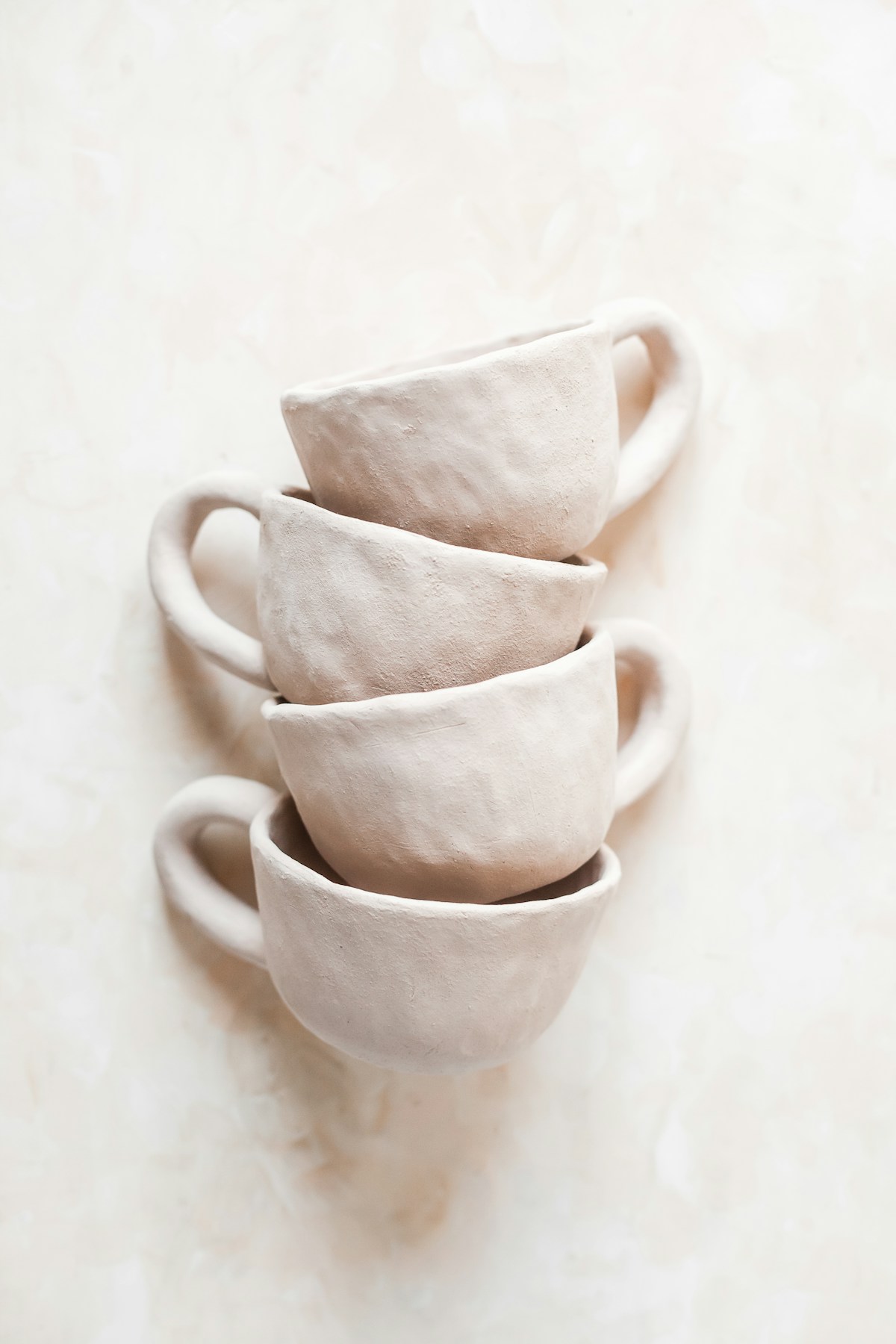
There is something you will never find: a glass-and-steel building that got more beautiful as it aged.
Limestone? Yes. Timber? Yes. Terracotta, hand-made brick, lime plaster: all of them, yes. Given time and weather, they deepen in color, develop texture, show the marks of use and repair. The buildings become more interesting to look at, more legible as objects that have existed in the world.
The glass curtain wall does something different. It oxidizes to a dull grey. The anodized finish scratches and cannot be restored. The sealed double-glazing fogs. Caulked joints discolor and crack after fifteen years. The building moves from new to broken, with no intermediate state that is worth noticing.
This is not primarily about maintenance. Traditional buildings require substantial upkeep: lime mortar repointing, timber treatment, tile replacement. But the aging process of a traditional building, even when imperfectly maintained, tends toward beauty. The aging process of a curtain wall building, even when perfectly maintained, tends toward obsolescence.
The question is why. And the answer leads somewhere unexpected.
The Aesthetic That Answers the Question
Fifteenth-century Japan developed an aesthetic for this. It emerged from the tea ceremony tradition and was largely crystallized by the tea master Sen no Rikyu between the 1550s and his death in 1591.
Wabi-sabi (侘寂). Three attributes: imperfect, impermanent, incomplete.
The sabi character is etymologically connected to the word for rust. The connection is intentional. Rust is not damage. It is time made visible on metal. The worn concave center of a medieval church step is not erosion. It is centuries of feet, recorded in stone. Lime plaster cracked and repatched carries the record of every winter and every repair. These marks are the building's history made legible.
Under a wabi-sabi sensibility, a building's value increases with age, because age is evidence of authenticity. Things have been there. People have used them. The building has participated in time.
Wabi also carries a specific emotional register. The original meaning was loneliness: specifically the loneliness that comes from living away from society, in simplicity, in nature. By the 15th century, Zen Buddhist influence had reframed this. The loneliness became a chosen quietness. The simplicity became a path to presence. The tea ceremony space Sen no Rikyu designed was deliberately small, rough-plastered, low-ceilinged. It stripped away social hierarchy by stripping away everything else. You arrived at what was immediately in front of you.
A Different Tradition, the Same Conclusion
In 1849, a Victorian critic named John Ruskin published The Seven Lamps of Architecture. He was writing from within a Christian Gothic tradition, from industrial England, with no knowledge of Japanese aesthetics.
The Lamp of Memory chapter arrives at wabi-sabi.
Ruskin argued that architecture's deepest power comes from age. The "golden stain of time" was not something to be covered or corrected. It was the building's most important quality. The weathering of Gothic stone was not decay. It was the accumulation of meaning. Ruskin opposed restoration so absolutely that he called it "the most total destruction which a building can suffer" and "a Lie from beginning to end." His prescription was ongoing maintenance, not intervention: "Take proper care of your monuments, and you will not need to restore them."
A Victorian critic working from Gothic Christianity and a Japanese tea master working from Zen Buddhism reached the same position. Time is not the enemy of a building. It is the material that reveals whether the building was made honestly.
That convergence is evidence. These were not similar people. They shared no cultural tradition, no aesthetic vocabulary, no correspondence across three centuries and the width of the earth. The agreement between them points at something real about buildings and time, not something contingent about either culture.
The Material Mechanism
The mechanism is not mystical. It is chemical and physical.
Traditional building materials are porous and breathable. Limestone, lime plaster, timber, unfired clay brick, terracotta: all of them participate in cycles of moisture absorption and evaporation. They interact with their environment rather than resisting it. The biological processes that produce patina (lichen, micro-algae, mineral deposition) proceed because there is a hospitable surface for them.
The aging process adds complexity: varied texture, color gradation, biological life. The material becomes more visually interesting the longer it has been in the world. A limestone block quarried yesterday looks like every other limestone block. A limestone block that has been in a wall for two hundred years looks like that specific wall, in that specific climate, facing that specific light.
Modern materials are sealed. Their design philosophy is resistance: keep water out, keep air out, maintain the surface as it was on installation day. When the seals fail (and they always fail, sealants rated for ten to fifteen years) the failure is visible as a scar. The staining, cracking, and discoloration of concrete reads as structural distress because structurally, it often is.
One type of material ages. The other type of material only deteriorates. One participates in time. The other merely endures it, imperfectly, for a while.
Kintsugi and the Repair
The Japanese tradition of kintsugi makes the same argument at a smaller scale.
A cracked ceramic bowl is repaired with urushi lacquer and powdered gold. The break is not hidden. The gold makes it visible. The history of the object is honored in the repair. The bowl becomes more valuable than it was when whole because it has been broken and survived. Its history is now part of its meaning.
The western tradition of building repair inverts this logic. Patch and paint. Match the existing surface. Make the repair invisible. The goal is to produce a building that looks as if nothing has happened.
This is both impossible and undesirable. You cannot make time not have happened. Attempting to conceal it produces neither the original building nor the aged building. It produces a building that looks repaired, which is aesthetically inert and historically dishonest simultaneously.
Traditional building repair in pre-modern Europe matched stone, lime, and timber as closely as possible not to deceive, but to maintain a surface that would continue to age coherently. The repair was subordinated to the ongoing process of the building's life.
What Modernism Got Wrong About Time
Modernism is the first major building tradition in human history that treated time as its enemy.
Every previous tradition built with the expectation that time would proceed and that the building should be designed accordingly. Inca stone-laying, Japanese joinery, medieval masonry, Islamic tile work: materials were chosen for how they weathered, not for how they looked on installation day. The presumption was that the building would outlive the builder and that this was the point.
The modernist position was different. A building is a designed artifact, and its designed state is its ideal state. Time is degradation. The correct response to aging is replacement.
Le Corbusier's formulation "A house is a machine for living in" implies the rest. Machines are replaced when they wear out. A machine is not supposed to age into beauty. It is supposed to function and then be superseded.
The buildings that resulted from this philosophy are now deteriorating across every major city. The maintenance costs of a glass curtain wall are substantial, and the results are merely neutral. "Maintained" means not visibly broken. The language of building evaluation changed accordingly. A traditional building is described as aged, weathered, patinated. A modernist building is described as maintained or unmaintained. One type participates in time. The other merely delays its effects.
Mono no aware (物の哀れ), the related Japanese concept theorized by Motoori Norinaga in the 18th century from his reading of Murasaki Shikibu's The Tale of Genji, describes a gentle melancholy at the transience of beautiful things. Norinaga argued the entire emotional power of the Genji narrative depended on this: awareness of transience is what makes beautiful things beautiful.
Applied to architecture: a limestone building that shows its age, that has worn into its landscape, that carries the evidence of past occupation, produces something like mono no aware. An awareness of time's passage that is emotionally significant. A curtain wall building, maintained or not, does not produce this. It produces legibility as current or obsolete. That is the entire range.
The Implication
The choice of material is a statement about what time is for.
Limestone says: time will improve me. Lime plaster says: the repairs will become part of my surface. Timber says: the grain will deepen and the marks of use will accumulate and none of this is damage.
Sealed aluminum composite says: I am trying to stop time. The moment the attempt fails, I will look broken.
Both statements come true.
One produces buildings that outlive their builders by centuries and become more beautiful as they do. The other produces buildings that are scheduled for replacement within their design life, whose maintenance cost rises precisely because they were built to resist what they cannot finally resist.
Ruskin understood this in 1849. Sen no Rikyu understood it in the 1580s. They came from opposite ends of the earth, from incompatible intellectual traditions, with no knowledge of each other.
They both looked at what happens to a made thing over time and asked the same question: are you working with that, or against it?