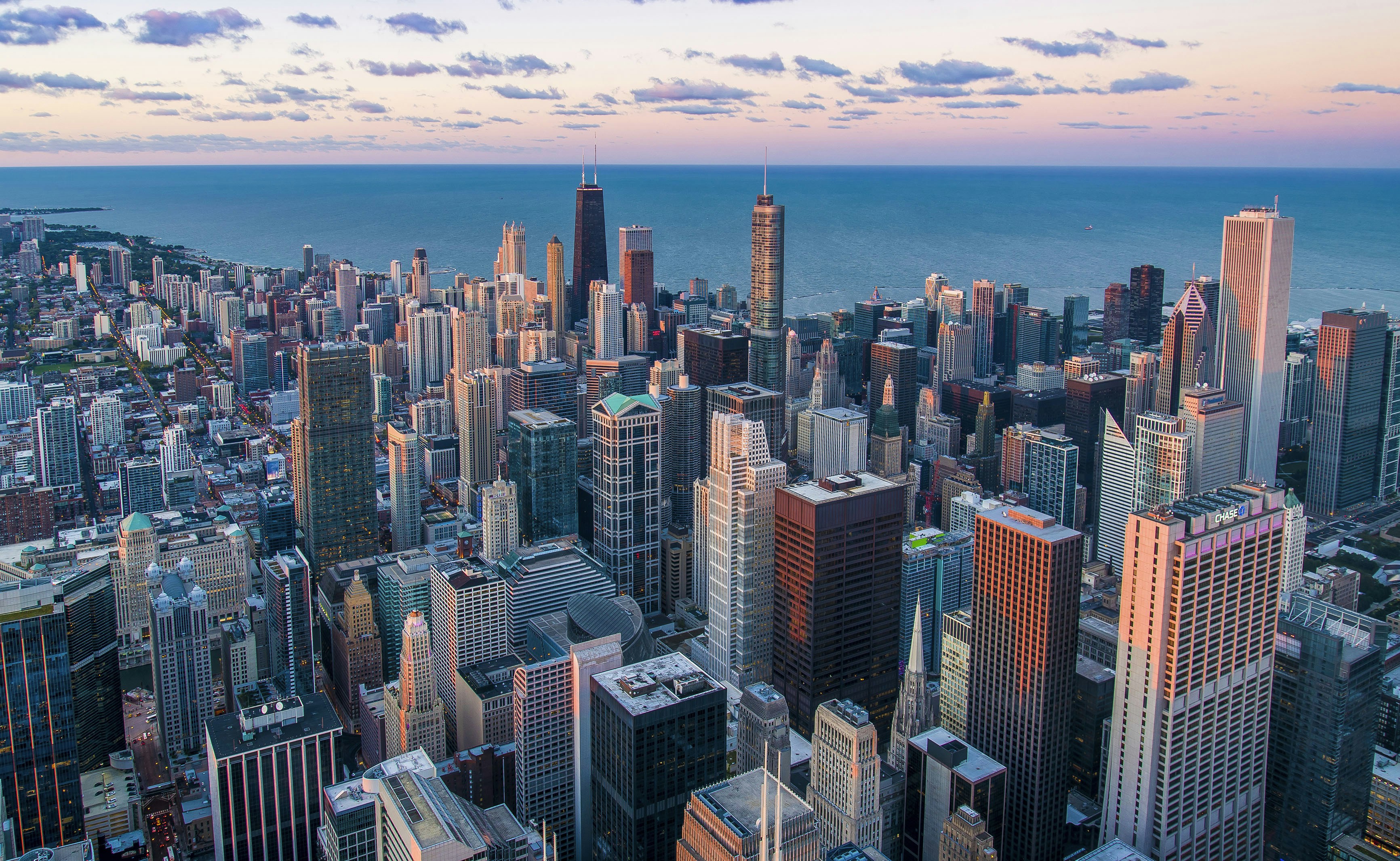
New York City spent years giving developers a deal: build us a public plaza at street level and we'll let you build taller. Hundreds of buildings took the offer. By the 1970s, Midtown Manhattan was dotted with these plazas — technically public, open to anyone, sometimes with trees and benches and even a fountain.
They were almost all empty.
Not inconvenient. Not underused. Empty. The pigeons had them to themselves.
A journalist named William H. Whyte decided to find out why.
The radical method
The planners who designed these spaces worked from assumptions. They assumed people would spread across available space, seeking comfort and privacy. They assumed shade was preferable to sun. They assumed people wanted to get away from the pedestrian flow, not stand in it.
Whyte did something different. He pointed time-lapse cameras at the plazas and watched.
The Street Life Project, which he began in 1969 with the New York City Planning Commission, ran for years. Whyte and his team filmed plazas at Seagram Building, Chase Manhattan, and dozens of others. They tracked exactly where people sat, stood, stopped to talk, and why. The data they accumulated contradicted almost every planning assumption on record.
The gap between how planners thought people would use a space and how they actually used it was not a small calibration error. It was a systematic failure of model-building. Planners had designed for a theoretical human who did not exist.
What the film showed
Seating is the single most important design variable. Not aesthetics. Not square footage. Not fountains. Seating. And not just any seating: movable chairs dramatically outperform fixed benches. The act of dragging a chair to a slightly different position gives a person a sense of agency over their space. That small autonomy changes the quality of the experience.
Whyte wrote: "The human backside is a dimension architects seem to have forgotten."
Sunlight is the most predictive environmental factor for plaza use. Sunny areas fill quickly. Shaded areas stay empty regardless of what else is nearby. Wind kills plazas entirely — and many of the incentive-zoning plazas were positioned at the base of towers that turned themselves into wind tunnels.
Food activates any space. "If you want to seed a place with activity, put in food," Whyte observed. A coffee cart or a hot dog stand is not an amenity — it is infrastructure. Active retail generates dwell time; passive retail (banks, travel agencies, insurance offices) does not.
The most counterintuitive finding: people cluster where other people already are. Not in empty corners where they could have space to themselves. On the sunny edge of the pedestrian flow, near the food cart, next to whatever small crowd has already formed. The presence of other people is itself the primary attractor. Activity is self-reinforcing. An empty plaza is not restful. It is socially legible as a failed space — and people avoid it accordingly.
Whyte called one mechanism "triangulation": an external element that provides a pretext for strangers to interact. A street performer. An unusual sculpture. A food cart. A dog. Without triangulation, strangers in a space remain strangers. With it, the space becomes social. The triangulation element doesn't need to be grand — it just needs to give two people something to reference before they address each other directly.
He also noticed where people stop to talk: not in the middle of pedestrian flow, but at the edge of it, technically obstructing traffic. He described this as a sign of a working social space, not a design failure. The conversations happen where the flows intersect, at the seams between movement and rest.
Women's presence was his reliability indicator. Where women feel comfortable and safe, the space is working. Where women systematically avoid a space, something is wrong — and men will avoid it too, whatever the nominal crime statistics say.
Bryant Park
In the late 1970s, a foundation commissioned Whyte to write recommendations for Bryant Park, a six-acre space behind the New York Public Library that had become a well-documented open-air drug market. His prescriptions followed his data: movable chairs, food kiosks, lower plantings to improve sight lines, visible entrances, direct connection to the surrounding sidewalks.
The plan sat dormant for over a decade.
In April 1992, the Bryant Park Restoration Corporation implemented the core of Whyte's recommendations. They put out 2,000 movable green bistro chairs. They added food vendors. They redesigned the entrances. The park had been closed for renovation since 1988.
It became one of the most heavily used public spaces in North America.
The transformation was not mysterious. The chairs could be moved. The sunlight could reach people who wanted it. The food vendors created reasons to be there. People came, and then more people came because people were already there. The self-reinforcing loop ran in the right direction.
Three independent paths to the same answer
Here is the thing about Whyte's findings: he wasn't alone in reaching them.
Jan Gehl was an architect in Copenhagen doing something completely different — studying how Scandinavian cities produced or failed to produce human social life at street level. His book Life Between Buildings appeared in Danish in 1971, before Whyte's The Social Life of Small Urban Spaces was published in 1980. The two men were working independently, from different disciplinary traditions, on different continents.
They reached the same conclusions.
Gehl: human social life happens at walking speed, not driving speed. The quality of edge conditions — the transition from building to street — is the most critical variable in street vitality. Ground-floor activation determines whether a street works. People need places to sit, stand, and linger, not just pass through.
Whyte confirmed every one of these from his New York film data.
Christopher Alexander, working at roughly the same time from a study of cross-cultural building patterns spanning centuries, formalized the same insights in A Pattern Language (1977). Pattern 88 — the street café with tables extending onto the pavement — is precisely what Whyte filmed as the most effective activator of ground-floor public space. Pattern 61 recommends small public squares of roughly 60 feet in diameter, on the grounds that larger ones feel deserted: exactly what Whyte's data showed about intimate scale versus grand civic gesture.
Alexander synthesized patterns from cultures and centuries. Gehl observed Copenhagen from architectural theory. Whyte filmed one American city for a decade. All three described the same conditions as necessary for human public life to emerge.
This kind of convergence is significant. When independent researchers using different methods in different contexts arrive at the same findings, the findings are probably real.
Why the failure persisted
Whyte's work was published in 1980 as both a book and a film. It was not obscure. The film was broadcast on PBS. The New York City planning code was eventually amended to require that incentive-zoning plazas actually be usable. Gehl went on to consult for cities on every inhabited continent. The placemaking movement — formalized through the Project for Public Spaces, founded by a former Whyte collaborator — spread his methodology globally.
And yet the majority of public space built in the intervening decades is still empty.
The reason is that the conditions Whyte described — movable seating, food, sun, small scale, connection to pedestrian flow — are conditions that cost money and require ongoing management. They are conditions that cannot be satisfied in a rendering, only in a functioning place. A developer builds a plaza once and leaves. The city inspects for technical compliance, not for whether anyone actually sits there.
There is also a structural mismatch between who designs space and who uses it. The person who commissions the plaza optimizes for visual impact, low maintenance cost, and liability reduction. The person who will use it wants somewhere to sit in the sun with a coffee and some passing humanity. These are not the same optimization function.
Behavioral economics — which emerged as a formal discipline in the 1980s and 1990s — eventually proved in laboratory conditions what Whyte had shown with a camera on a New York sidewalk: that people's stated preferences diverge systematically from their revealed behavior. The rational-actor model produces accurate predictions of what people say they want and inaccurate predictions of what they do. Whyte never used the language of behavioral economics. He just watched.
What remains
The conditions that produce working public space are not mysterious. They were documented in 1980. Sunlight. Food. Movable seating at the right height. Pedestrian-scale edges. Human density sufficient for the self-reinforcing loop to engage.
What the camera showed in the 1970s, and what the fixed benches in empty plazas still demonstrate today, is a gap between designed intent and human behavior that won't close until the people who fund and evaluate public space are held to the same standard as the people who use it.
Whyte put it plainly: "It is difficult to design a space that will not attract people. What is remarkable is how often this has been accomplished."